Home Blunder Series: Common Interior Design Mistakes (Part 7)
June 15, 2026 - Michelle Murphy
The summer solstice is here, and with all this extra daylight… we’re shining a bright, unforgiving light on even more home blunders.
Some of them hide in plain sight. Others only show up when the sun hits your space at just the wrong angle (you know the one). But all of them have the power to quietly sabotage the look and feel of your home.
Hard to believe we’re already at part seven of this series. It turns out there’s no shortage of design mishaps to talk about.
If you’re just catching up, you can peek at the earlier culprits in part one, part two, part three, part four, part five, and part six.
Ready to drag a few more sneaky mistakes out of the shadows? Let’s get into it.
Common Interior Design Mistakes
These common interior design faux pas can seriously impact how your home looks, feels, and functions. The good news? With a bit of planning, they’re totally avoidable.
#20: Forgetting About Real-Life Storage
We all love a beautifully styled room with clear surfaces and curated decor. But real life comes with mail, pet gear, backpacks, chargers, craft projects, and that one “mystery pile” that never goes away.
A major blunder I see often is planning a room around how it looks in a single moment, not how it actually needs to function day after day. The result is closets that are bursting and countertops that become permanent dumping grounds. Rooms can feel messy an hour after you’ve cleaned.
You don’t have a “messy personality.” You probably just don’t have enough (or the right kind of) storage.
Design it for how you live
Storage isn’t just about hiding things. It’s about making your home easier to live in. When there’s nowhere for everyday items to land, clutter becomes the default “design feature” of your space.
The result? Rooms that always feel a little chaotic, no matter how often you tidy.
What You Should Do Instead
Think of storage as a non-negotiable design element, not an afterthought.
- Start with a quick “stuff scan”
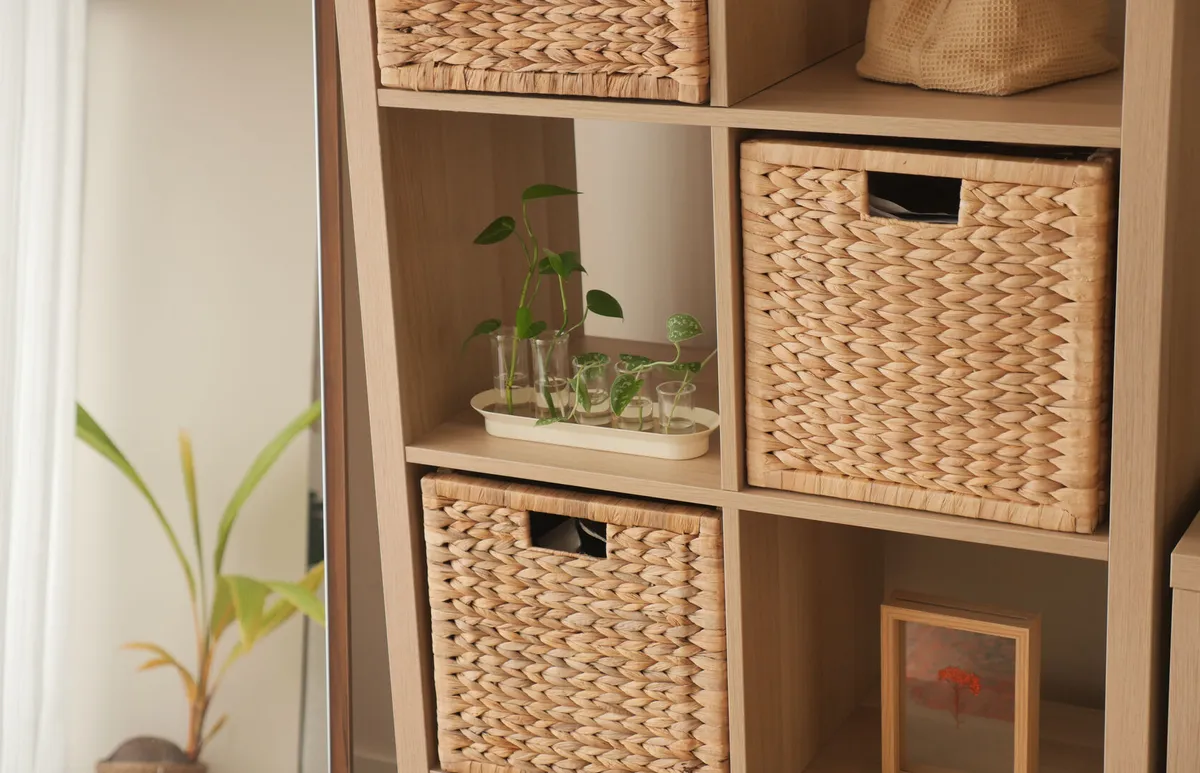
Walk through each room and notice what actually lives there: toys, books, mail, dog toys, workout gear, etc. Design for that reality, not a fantasy version. - Mix open and closed storage
Use open shelves for decor and often-used items, and closed storage (drawers, cabinets, baskets with lids) for everything else. This keeps the room visually calm without demanding perfection. - Choose multi-functional pieces
Think storage ottomans, benches with lift-up seats, coffee tables with drawers, and nightstands with real storage (more than just a single tiny shelf). These pieces quietly pull double duty. - Give each “category” of stuff a home near where it’s used
Entry: hooks, shoe storage, baskets for hats and mitts. Living room: hidden storage for blankets, kids’ toys, remotes, chargers. Bedroom: proper clothing storage plus a landing spot for books, glasses, and devices.
When storage is intentional, your space can look curated and still handle the realities of daily life.
#21: Treating the Entryway Like a Dumping Ground
Your entryway works harder than almost any other area in your home. It handles everything from shoes, boots, and bags, mail and parcels, dog leashes, umbrellas and sports gear.
Yet it’s often left as a blank wall and a lonely hook. That’s how you end up with the classic “drop zone disaster” you trip over multiple times a day.
Why this small space has a big impact
The entry sets the tone for everything that follows. When it’s chaotic, you feel it every time you come and go. When it’s organized and intentional, your whole home feels calmer and more put together.
Turn your entry into a mini workhorse
Even the tiniest entryway can be functional with a few smart moves.
- Give everything a landing spot
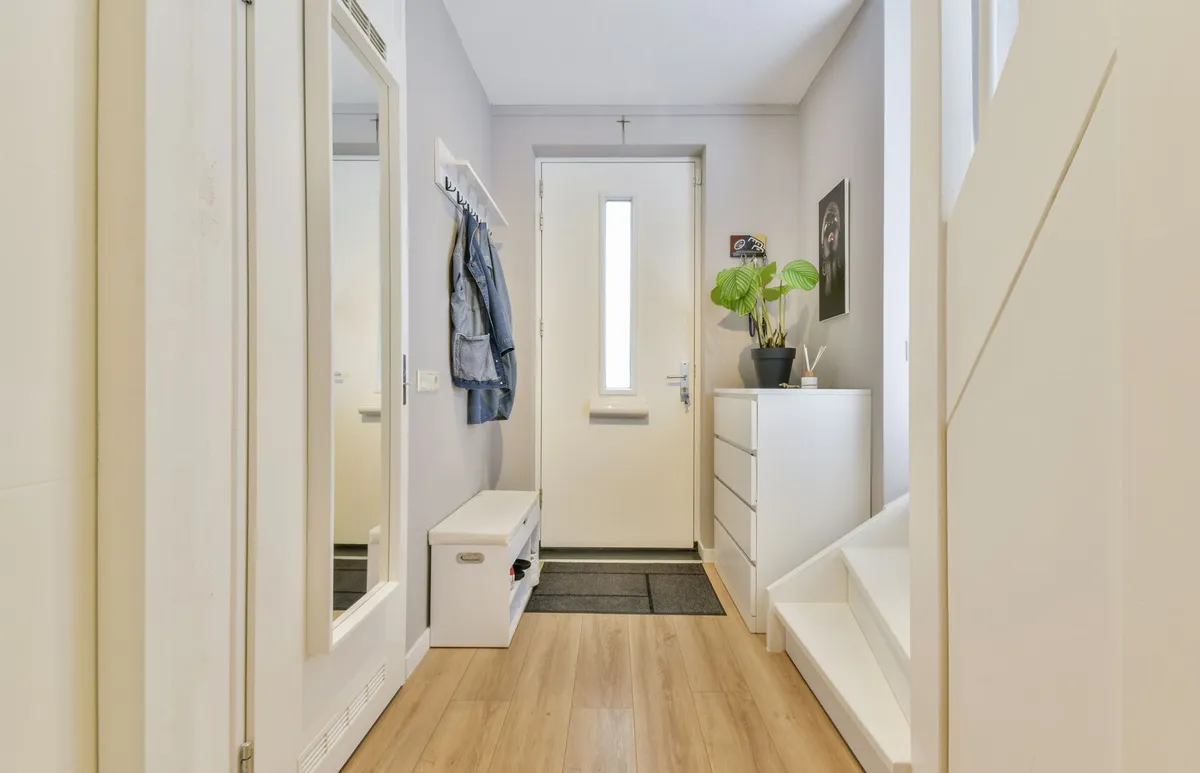
Hooks for coats and bags, a tray or bowl for keys, a bin or file for mail, and an actual solution for shoes (not just a pile by the door). - Scale to your footprint
Small entry: a slim console with drawers, wall hooks, a narrow bench with baskets underneath, and a mirror. Larger foyer: a full bench, closed cabinet or armoire, statement light fixture, and a rug to anchor the area. - Use the walls
Think hooks, peg rails, shallow shelves, and wall-mounted cabinets. Getting storage up off the floor helps the space feel bigger and more intentional. - Don’t skip the “pretty”
A small lamp, artwork, a mirror, and a runner can transform the entry from chaos corner to “welcome home.”
#22: Ignoring How Your Home Sounds
We talk a lot about how rooms look, but not nearly enough about how they sound.
Open-concept layouts, hard flooring, high ceilings, and minimal textiles can leave you with echoey, overly loud spaces where every sound bounces around:
- TV noise bleeding into the kitchen
- Kids playing echoing across the whole main floor
- Conversations that feel sharp instead of cozy
The room might be beautiful, but if the acoustics are harsh, it won’t feel relaxing.
Why acoustics are a design issue
Sound affects how calm and comfortable a space feels, just like lighting or colour. When there’s nothing soft to absorb it, everyday life can start to feel noisy and draining.
Soften the soundscape
You don’t need special panels or complicated systems, just some well-chosen finishes and layers.
- Add softness where you can
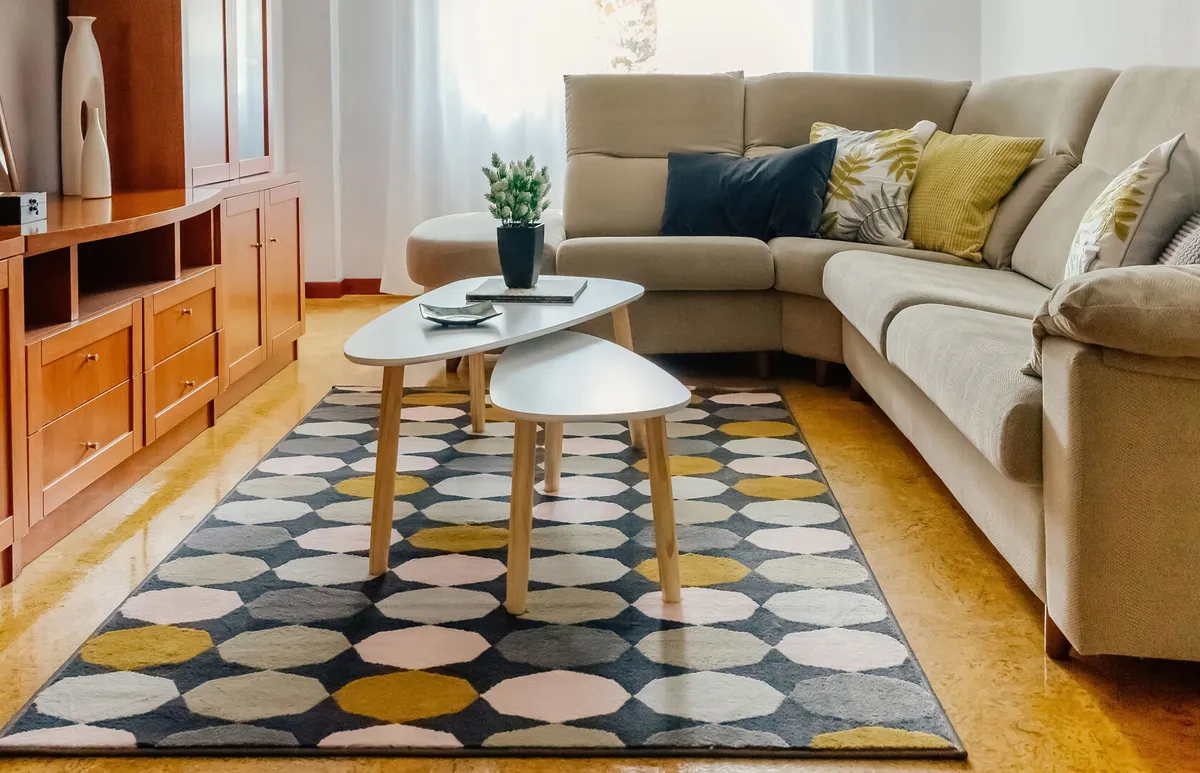
Rugs on hard floors, upholstered seating, floor-length curtains, and plenty of pillows and throws all help absorb sound and add warmth visually. - Break up big echo chambers
Use area rugs, bookcases (with actual books and decor), plants, and furniture groupings to interrupt sound bouncing around large, open areas. - Be mindful of tall ceilings
Very high ceilings amplify echo. In those spaces, consider large fabric light fixtures, wood beams, or generous curtains to visually and acoustically soften the room. - Close off what needs privacy
If TV or playroom noise is constantly invading other areas, a well-placed door or pocket door can be a game-changer, especially in busy households.
Conclusion
A beautiful home isn’t just about what you see in photos. It’s about how it works when life is actually happening.
Smart storage, a well-planned entry, and better acoustics don’t always show up in a snapshot, but you feel the difference every single day.